The Data Center Is Not the Problem
Seventy percent of Americans now oppose a data center in their neighborhood. The water usage is real. The energy demand is real. The engineering responses are real. None of that explains what is actually happening.

They told you AI would take your job. Then your life. Then quietly reversed as the IPO roadshow started. The data center is the one target you can actually reach, and 70 percent of your neighbors are already there. First warning sign going into the 2026 midterms.
By Stephen Messer
Co-founder, Collective[i] and Intelligence.com. Co-founder, LinkShare (sold to Rakuten, $425M). EY Entrepreneur of the Year / Deloitte Fast 50 Winner (2x). Board member, Spire Global (NYSE: SPIR). Join me at Intelligence.com.
October 2026
When Russians grow angry at the war, they do not march on the Kremlin. Putin is a dictator and will not stand for it, so the anger goes elsewhere. It finds the generals. It finds the oligarchs. It finds the symbols that are visible and reachable and cannot punish the person doing the reaching.
This is how political anger works everywhere. People direct their frustration at the targets they can actually affect. The underlying cause may be vast and diffuse and controlled by people who are untouchable. The expression finds what it can find. In America right now, what it is finding is the data center.
A Gallup poll from March 2026 found that 70 percent of Americans oppose a data center being built in their neighborhood. There are at least 142 activist groups organized across 24 states working to block data center construction. In 2025, local opposition led to the delay or cancellation of projects totaling 156 billion dollars in planned investment. A 20,000-signature petition stopped a data center from being built in a repurposed Maryland mall. The New Brunswick city council canceled a project and approved a public park instead, hours after a protest. The San Marcos city council in Texas voted 5 to 2 to deny zoning for a 1.5 billion dollar project.
The data center has become the visible, reachable, punishable target for something much larger than water usage and noise. With a midterm election a month away, it is also an early warning sign for what AI and tech are about to run into politically. If you have ever sat through a city council meeting on this, you already know how it ends. If you have not, picture a packed room, a line of residents at the microphone, and a tech executive with slides about closed-loop cooling. The executive is losing before the first slide loads.
What the anger is actually about
In June 2025, Sam Altman warned publicly that "a lot of jobs will go away" as AI advanced. More recently, that the model is getting out of control and the industry should slow down before humanity is destroyed. He has described entire categories of entry-level knowledge work as vulnerable to rapid displacement while warning of an AGI that could exterminate the species.
Dario Amodei went further. The Anthropic CEO stated publicly that roughly 50 percent of white-collar positions faced existential risk from AI automation and forecast unemployment rates of 10 to 20 percent within several years. "We, as the producers of this technology, have a duty and an obligation to be honest about what is coming," Amodei told Axios. "I don't think this is on people's radar."
Both men said these things while becoming billionaires from the technology they were describing as an existential threat to their listeners' livelihoods and, more recently, their lives. OpenAI is preparing an IPO at or above 1 trillion dollars. Anthropic is rumored to be heading for public markets by November at close to 2 trillion. The people at the top of these companies will be among the wealthiest individuals in American history. The people in the communities where their data centers are being built will, in many cases, be the ones whose jobs the technology claimed it would displace.
The jobs apocalypse never arrived. Anthropic's own economists, Massenkoff and McCrory, published in March 2026 that no aggregate unemployment rise from AI has materialized. The predicted mass displacement did not happen. The predicted 10 to 20 percent unemployment did not happen. Entire categories of knowledge work the CEOs told Axios would be gone are still staffed by the same people doing roughly the same jobs with better tools.
So the narrative moved. Jobs were quietly set aside, and the story became existential. The models are becoming too powerful. The alignment problem is unsolved. Humanity could be destroyed within a decade. That version carries further on social media than the jobs version ever did. It is also what fills the mouths of the AI safety researchers who have been resigning publicly from the companies that are about to go public.
Mrinank Sharma resigned from Anthropic in February 2026 with a public statement that "the world is in peril." The post crossed ten million views. Jacob Coxon resigned from Anthropic in September 2026 at age twenty-seven, saying the company was "gambling with our lives." His post crossed seventy million. Neither resignation came with a specific technical claim that could be fact-checked. Both got amplified across every platform. The data center protester in Prince William County, Virginia, has probably never heard either name. Their worldview was shaped by what the virality of those posts put into the water supply of the discourse.
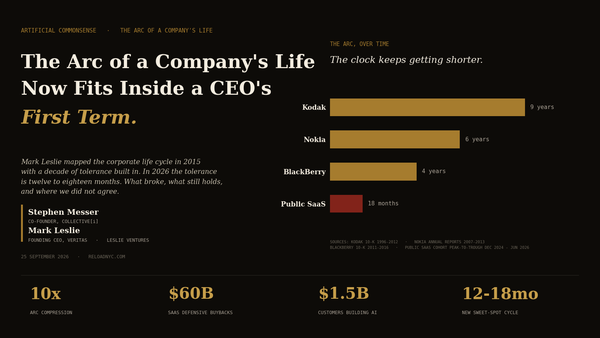
Chamath Palihapitiya called the entire pattern out in March 2026. He described the job-displacement narrative as "fundraising gobbledygook." His argument: AI labs deployed the job-apocalypse story to demonstrate their models' capabilities to private investors. Scare the public about what the technology could do. Raise money from the people impressed by what the technology could do. Become very wealthy in the process. Then, in May 2026, both Altman and Amodei reversed. Altman said he was "pretty wrong" about AI's economic impact and "delighted to be wrong." Amodei, who had predicted that AI would eliminate half of entry-level white-collar jobs, now said automation might actually expand the work people do. The timing of both reversals: just as both companies were preparing for public listings valued at or above a trillion dollars.
Market analysts noted that the shift in messaging coincided with the need to attract institutional investors who prefer stability over disruption narratives. Whether or not that is the whole explanation, the sequence is visible to anyone paying attention. Spend two years telling the public their jobs are at risk. Pivot to telling them their lives are at risk when the jobs claim does not pay off. Reverse the whole story when the IPO roadshow needs a different one. Become a billionaire in the process.
The 142 activist groups organizing to block data centers are not sophisticated political analysts. Most of them could not articulate the connection between Altman's net worth and the server farm proposed for their county. The anger does not require that level of articulation. It is diffuse and instinctive, and it finds the physical manifestation of the thing making people anxious about their economic and existential future.
The anger is not about water. It is about the gap between the people becoming billionaires from a technology and the people being told the technology would eliminate their jobs or lives. The data center is the thing they can protest.
The engineer's answer to the wrong question.
Tech takes the world at its word. Engineers are trained to solve the stated problem. When the stated problem is water usage and energy consumption, the engineering response is to improve water usage and energy consumption.
Microsoft, at its Build 2026 conference, emphasized that its newest data centers have roughly the same water usage as a single restaurant, thanks to closed-loop cooling. Older designs pumped water into cooling towers where it evaporated and needed constant replacement. The new design adds water once at construction and then recirculates it indefinitely. Google laid out a five-part water sustainability pledge: replenish more water than it uses at each site by 2030, report annual usage, and pursue alternatives to freshwater. Four major tech companies signed the Data Center Innovation Initiative, committing to fund startups working on cooling and energy technology. These are real improvements. The National Wildlife Federation called the pledges a good start.
They will not solve the problem. Conservation groups noted immediately that there is no standardized way to measure water use across the industry, which means the pledges cannot be held to any common standard. Beyond that, the pledges address the stated grievance, not the actual grievance. A data center that uses no water and runs on renewable energy is still a data center built by the people who told you your job was going away, then that your life was going away, then that neither claim was ever accurate.
What the data center actually delivers
Here is what nobody at the city council meeting is hearing.
The data center buildout is the first major upgrade to American physical infrastructure in two generations that is not being paid for by taxpayers or ratepayers. Private capital is doing it. The hyperscalers spent 600 to 690 billion dollars in capital expenditure in 2026, and a significant portion of that is landing in the physical grid that American communities actually use. Substations. Transformers. Transmission lines. New generation capacity. Fiber. Water infrastructure. All of it paid for by the companies.
Our existing grid is in bad shape. The American Society of Civil Engineers gives US energy infrastructure a C-minus. Substantial portions of transmission equipment are over forty years old. Some distribution components in older cities predate World War II. Rates are high and reliability is low. Outages have been getting more frequent across most of the country for the past decade. The traditional way to fix this is a public bond issue, a federal infrastructure bill, or a rate hike. All three cost citizens money and move slowly. The AI buildout is bypassing that entirely. The companies are paying.
They are also paying for cleaner generation. Microsoft and Constellation signed a 20-year power purchase agreement in September 2024 to restart the Three Mile Island Unit 1 reactor, bringing roughly 835 megawatts of carbon-free capacity back onto the grid by 2028. Google partnered with Kairos Power in October 2024 on small modular reactors targeting 500 megawatts of new nuclear capacity by 2030. Amazon acquired a data center campus directly adjacent to Talen Energy's Susquehanna nuclear plant and secured 960 megawatts of carbon-free power there. Meta signed a 20-year deal with Constellation in June 2025 for 1.1 gigawatts at the Clinton nuclear plant in Illinois. Every one of those deals adds net new carbon-free generation to the American grid. None of it costs local ratepayers anything.
The jobs are substantial and well paid. The Virginia data center industry alone supports roughly 74,000 jobs across construction, operations, and the supply chain, with average compensation well above the state median. Construction phases employ hundreds to thousands of trade workers for two to three years per site. Prince William County, the single densest concentration of data centers in the country, has become one of the fastest-growing tax bases in Virginia. The 2026 figures are not public yet, but through 2023 the data center industry generated roughly 174 million dollars in annual state tax revenue in Virginia alone, with billions in federal and local taxes nationally.
The counter-argument people hear at the city council meeting is that data centers drive rates up because they add demand. True in the short run. The honest answer over a five-to-ten-year horizon is that the hyperscalers are also funding new generation at a pace nobody else is, which brings supply online that reduces rates on net. The alternative, which is nobody building the data centers, delivers neither the demand nor the new supply. The grid still ages. The upgrade still needs to happen. The bill then goes to the ratepayer or the taxpayer rather than to Microsoft, Google, Amazon, and Meta.
I made the structural case in Tech Is Not an Asset Class Anymore. Tech is the economy now, which means tech infrastructure is American infrastructure. The specific version of that for data centers is in We're Complaining About the Wrong Thing, my first post on this blog. Grid gets rebuilt. Rates eventually come down. Clean energy expands. Thousands of well-paying jobs land in counties that have been losing their manufacturing base for forty years. Tax base grows. All of it on private capital, with no bond issue and no rate hike. American competitiveness in AI, which is American competitiveness in the next economy, holds steady or improves.
That is the actual story. It has not reached the people showing up at the Prince William County planning commission. It is the single biggest communication failure in American technology right now.
Why tech keeps losing the emotional argument
Tech is terrible at political argument because tech is literal. The engineering mind takes the stated problem seriously and treats it as the actual problem. When a protester at a city council meeting says water usage is destroying the aquifer, the engineer takes the complaint at face value and designs closed-loop cooling. When a protester says the data center will raise electricity rates, the engineer builds new generation and signs twenty-year PPAs. The responses are technically correct and politically useless, because the stated grievance is almost never the actual grievance.
Politics is emotional. The woman at the city council meeting is afraid, and she is angry, and the water complaint is her justification for being there. The water is the thing she can say out loud. The fear is the thing she cannot.
Microsoft shows up at the next meeting with closed-loop cooling and tells the room that water usage is now equal to a restaurant. The engineer thinks he solved the problem. The room hears a tech company making a show of fixing something that was never the point. It reads as whitewashing. It confirms the suspicion that nobody in the industry is listening to the actual fight. The engineering response was supposed to earn goodwill. It cost whatever goodwill was left.
The industries that have survived similar emotional backlashes solved the emotional problem first and the technical one second. The auto industry survived environmental regulation by telling a story about American manufacturing jobs and the Big Three bringing cleaner cars to market, not by explaining the mechanics of catalytic converters. The pharmaceutical industry survived HIV activism in the 1990s by changing clinical trial structure and telling a story about patient advocacy, not by explaining FDA protocols. Both industries were eventually regulated, but on terms they could live with. Tech is heading toward being regulated on terms it cannot live with, because tech cannot see the emotional problem clearly enough to address it.
The cost of this is not symbolic. It is a 156 billion dollar hole in planned infrastructure in 2025 alone. It is a bipartisan coalition organizing against the industry heading into a midterm. It is a public that will cheer when Dario Amodei becomes a public-markets billionaire in November, because the schadenfreude of watching that happen overlaps perfectly with the anger about the technology he spent two years saying was about to end the world. Tech can keep solving water consumption and lose this fight anyway. The only thing that would actually work is treating the emotional argument as the real argument. Nobody inside the industry is willing to do that yet, because the people trained to do it do not have the authority, and the people with the authority were trained in the thing that is failing.
Politics is emotional. Engineering is literal. Tech keeps bringing a cooling spec to a street fight. The street wins every time.
Why this becomes political in November
The 2025 off-year elections in Virginia, New Jersey, and Georgia all featured data-center-coded rhetoric about electricity bills and environmental impact. In Virginia, where Prince William County has become the national epicenter of data center construction, candidates on both sides ran on versions of the same message. Fewer megacampuses. Higher scrutiny. More local control. The candidates who leaned into it won their primaries. The candidates who defended the industry ran into local organizing that outperformed the polling.
Those were the warm-up. November 2026 is where this crosses from local into national. The midterms are a month away as I write this, and data center rhetoric is already showing up in House races in Virginia, Georgia, Ohio, Pennsylvania, Nevada, and Arizona. The coalition is bipartisan in a way that should alarm anyone in the industry. The MAGA-populist right distrusts the tech billionaires on cultural grounds. The progressive left distrusts them on wealth-concentration grounds. Both show up at the same city council meetings. Both plan to make it an issue at the next debate. There is no coalition pushing back from the other side, because the only coalition that could push back is Silicon Valley itself, and Silicon Valley has spent two years telling everyone their jobs and lives are in danger.
The Anthropic IPO is scheduled for the same window as the election. If it prices at or near 2 trillion dollars, Dario Amodei and his co-founders become visibly ultra-wealthy inside a one-week news cycle that already contains congressional campaigns running on data center opposition. The two stories will cover each other on local television. The OpenAI IPO behind it will do the same thing a few months later. These will be the biggest IPOs in American history, and they will land directly into the political window the industry would have told its PR team to avoid.
The IPO and the election happen in the same month. The founders become visibly ultra-wealthy inside the news cycle that already contains candidates running against the industry. The industry's PR team never got the chance to pick either date.
Why this matters for the United States.
Data centers are not a neutral infrastructure choice. They are the physical substrate of American competitiveness in AI. I made the strategic case in The Trillion-Dollar Trade Wall Street Isn't Seeing and The Reason Prior Tech Bubbles Broke Just Got Fixed. The models that will determine whether the United States or China leads in AI capability over the next decade run on the servers inside these facilities. Policymakers who understand the geopolitical stakes regard the buildout as a national security priority on the order of the interstate highway system or the space program.
The people blocking data center construction in San Marcos and New Brunswick and rural Pennsylvania are not thinking about Chinese AI capability. They are thinking about their electricity bills, their water supply, their community character, and the ambient anxiety that the technology being built inside these facilities may not have their interests at heart. Both things are true at the same time. The geopolitical stakes are real. The anxiety is legitimate. The engineering responses do not reconcile them. The economic story would. Nobody with the authority to tell it has.
The current trajectory is bad for everyone. A situation in which the communities hosting the physical infrastructure of American AI leadership are actively hostile to that infrastructure is not sustainable. The 156 billion dollars in delayed or cancelled projects is not a project management problem. It is a signal that the social compact between the technology industry and the American public has broken down in a way that no engineering upgrade and no PR campaign can repair on its own.
The numbers.
70 percent of Americans oppose a data center in their neighborhood (Gallup, March 2026). 142 activist groups across 24 states are organized to block construction (Data Center Watch). 156 billion dollars in planned data center investment was delayed or cancelled in 2025 due to local opposition. Hyperscaler capital expenditure: 600 to 690 billion dollars in 2026. Virginia data center industry: roughly 74,000 jobs supported. US energy infrastructure grade (ASCE): C-minus. Anthropic IPO target: close to 2 trillion dollars, scheduled for November. OpenAI IPO target: above 1 trillion dollars. 2026 midterms: one month away.
What should actually be done.
The engineering improvements are necessary and should continue. Closed-loop water, renewable sourcing, noise mitigation, and transparent reporting on resource usage are all legitimate responses to legitimate concerns. They are the floor, not the solution.
The solution requires the technology industry to do something it has historically resisted, which is to treat the public as a stakeholder rather than an obstacle to be managed or a problem to be optimized away.
The specific version of that for the AI era is economic participation. If the technology is as transformative as its creators claim, and the wealth creation is as concentrated as it appears to be, then the question of who benefits is not a fringe political concern. It is the central political question of the next decade. Here is a concrete idea. OpenAI is preparing to go public above 1 trillion dollars. Anthropic is heading for 2 trillion by November. SpaceX is already public. Set aside 15 percent of the equity, without voting rights, into a public trust structured to benefit the communities most affected by AI displacement. Not as charity. As recognition that the infrastructure of this technology, meaning the data centers, the electricity grid, the water supply, the tax base, is provided by those communities, and that the value created by that infrastructure belongs in part to the people who provided it.
This is not a radical idea. It is the logic of the Alaska Permanent Fund, which distributes a share of oil revenues to residents. It is the logic of the community benefit agreements that large real estate developers routinely sign in exchange for zoning approvals. It is the logic that says you are building something of enormous value on top of shared infrastructure, and the people who share that infrastructure deserve a share of the value.
The alternative is a decade of data center protests, political backlash, regulatory overreach, and the steady erosion of the public trust any industry needs to operate at all. The engineers will keep improving the cooling systems. The activists will keep showing up at city council meetings. Neither side will have addressed what the argument is actually about.
The pattern that keeps repeating.
The railroad barons of the 19th century built infrastructure that transformed the American economy and made a small number of people extraordinarily wealthy. The anger at the railroads was not primarily about the trains. It was about the sense that the enormous value created by the railroad network was flowing entirely to a handful of men while the farmers and workers and communities along the rail lines bore the costs. The political response was the Progressive Era. The Sherman Act. The Interstate Commerce Commission. The trust-busting campaigns.
The tech industry has watched that history and drawn the wrong lesson. The lesson most of Silicon Valley absorbed is: avoid regulation, move fast, the market sorts it out. The lesson the Progressive Era actually teaches is that when the concentration of wealth from a transformative technology becomes visible and the public feels they have no stake in the outcome, the political response is both inevitable and disruptive to everyone, including the technology's creators.
The data center protests are early. The 70 percent opposition number, the 156 billion dollars in cancelled projects, the 142 activist groups across 24 states. These are leading indicators, not the full expression of what happens when the anger finds more powerful political channels. The industry has time to get ahead of it. The window is not unlimited, and November is going to narrow it fast.
The engineers building closed-loop water systems are doing the right thing. The executives who spent two years predicting job apocalypse, then pivoted to civilizational apocalypse, then reversed both predictions just before the IPO roadshow are doing the wrong thing. The gap between those two responses is the problem. The data center caught in the middle is paying for both.
Argue with me.
Three questions I actually want answers to. If you work inside one of the AI labs and believe the resignation posts and the capability warnings were sincere rather than instrumental, make the case. Send it. If you are a local organizer on a data center fight and you think I missed what is actually driving the anger in your county, I want to hear that too. If you are running for office this November on a version of this argument, this piece is for your voters and I would be glad to know what landed and what did not.
If one friend, one neighbor, one city council member, or one candidate in your area should read this, send it to them. If you have been to a town meeting about a proposed data center and have a story about how it went, reply with it. Those are the clearest signal I get on where the piece needs to go next. Subscribe here for the next piece.
Collective[i] has spent ten years building a verified relationship graph and an AI model for how the world actually does business. A real neural network, real time-series data, real forecasts running at ninety-three to ninety-five percent accuracy in production.
Intelligence.com opens that same graph to anyone with a professional network worth using. If you are trying to find the signal underneath the political noise, this is where that signal starts.
Join here.
Related reading
- We're Complaining About the Wrong Thing. The original piece on why the AI buildout should help host communities, not hurt them.
- Tech Is Not an Asset Class Anymore. Why tech infrastructure is now American infrastructure.
- The Trillion-Dollar Trade Wall Street Isn't Seeing. Why American compute substrate matters strategically.
- The Reason Prior Tech Bubbles Broke Just Got Fixed. Why 725 billion in Big Tech AI spend changes the entire picture.
- Karp and Nadella Are Selling You a Wall. Ten percent proprietary, ninety percent externality.
- Bubble Talk Is How You Spot Someone Who Missed AI. The tell, in real time.