
The Data Center Is Not the Problem
Seventy percent of Americans now oppose a data center in their neighborhood. The water usage is real. The energy demand is real. The engineering responses are real. None of that explains what is actually happening.
Seventy percent of Americans now oppose a data center in their neighborhood. The water usage is real. The energy demand is real. The engineering responses are real. None of that explains what is actually happening.
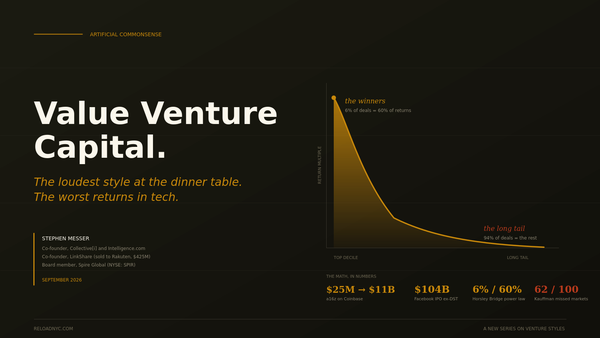
The loudest style at the dinner table. The worst returns in tech. Venture just got big enough that this matters to your LPs. If you are a family office, a hedge fund, a PE firm, or an LP writing checks to venture for the first time, read this before you
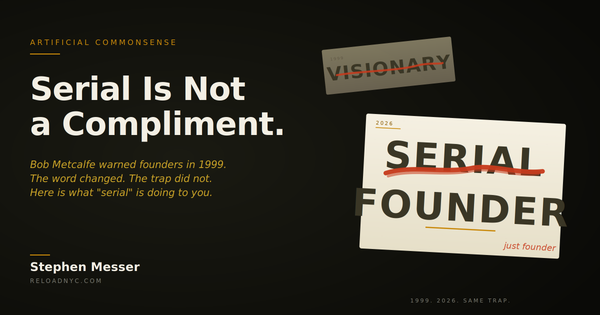
Bob Metcalfe told founders in 1999 never to let a publicist call them "visionary." He wrote it after watching the same board that praised him with the word replace him with a professional operator. The word visionary faded. The trap did not. It got a new label. This
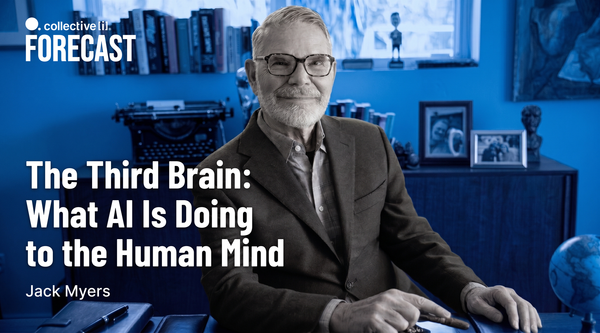
🎙️ The Third Brain: What AI Is Doing to the Human Mind. With Jack Myers 🗓️ Tomorrow, Sept 30 at 3:30 PM ET. Reserve your spot Every few years, a technology comes along that makes people ask if they're about to become obsolete. Jack Myers has watched that fear
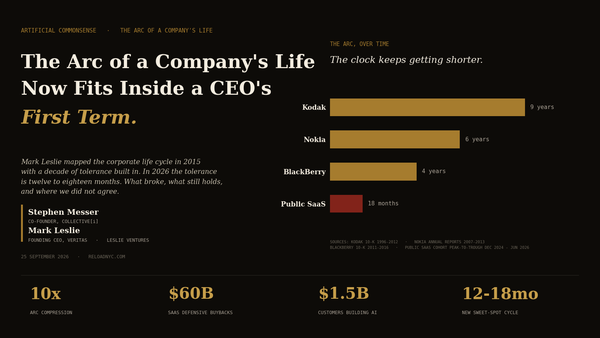
Twenty-six years after Marc Benioff picketed Siebel with actors and champagne, he borrowed twenty-five billion dollars to run the same defensive playbook against himself. Mark Leslie wrote the framework for this in 2015. He and I had dinner. This is what we agreed on. By Stephen Messer Co-
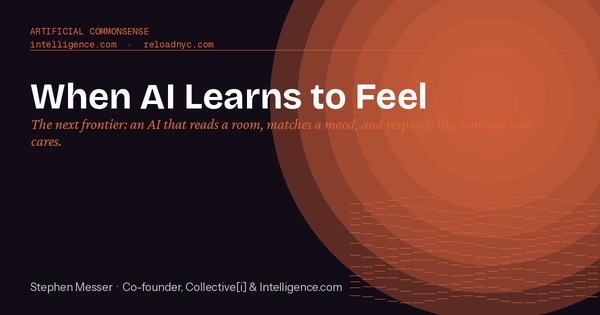
The next frontier isn't a faster model—it's an AI that reads a room and responds like someone who cares. It will transform healthcare, elder care, and education. It will also be the most sophisticated manipulation tool ever built. Both arrive at once.
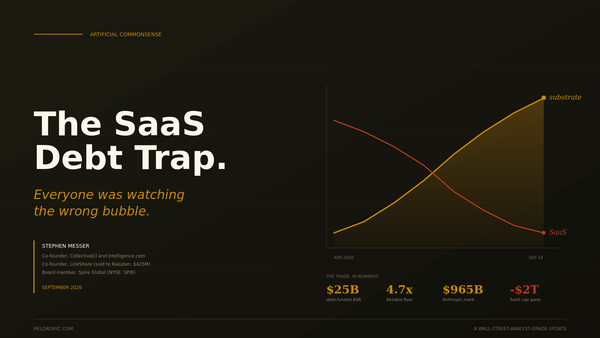
Wall Street spent the last week arguing about whether AI is slowing down. Wrong debate. The bubble nobody is talking about is what the SaaS incumbents did when their multiples collapsed.
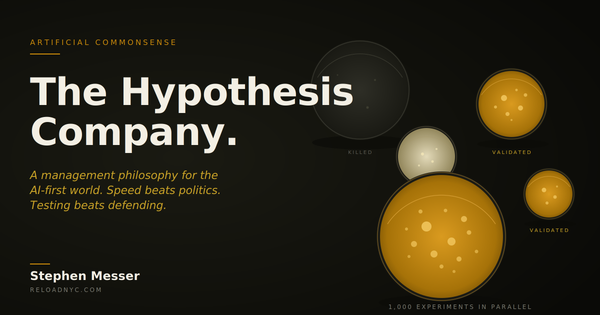
Stephen Messer · Co-founder, Collective[i] & Intelligence.com. Co-founder, LinkShare (sold to Rakuten, $425M). EY Entrepreneur of the Year and 2x Deloitte Fast 50 Winner. Board Member, Spire Global (NYSE: SPIR). Join Intelligence.com Harvey just closed at $15.5 billion. Its ARR quadrupled from $100 million to
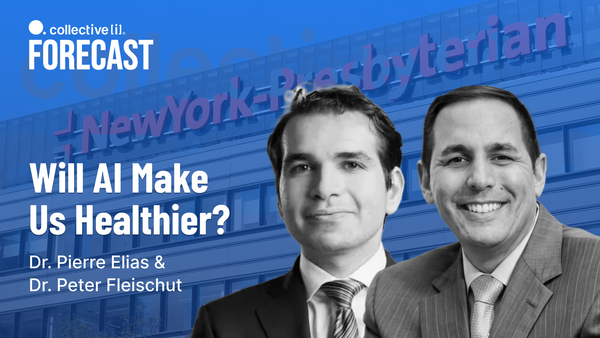
🎙️Will AI make us healthier? With Dr. Peter Fleischut & Dr. Pierre Elias 🗓️ Tomorrow, Sept 17 at 2:00 PM ET. Reserve your spot Two diseases have outlasted every generation of medicine we've thrown at them. Heart disease. Sickle cell. For decades, doctors could only catch them once
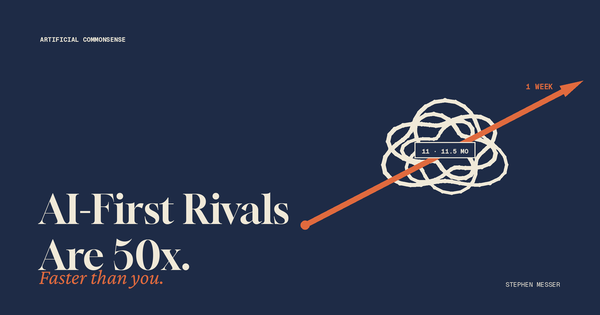
Your buying committee: 11 people, 11.5 months to close. Your AI-first rival: one person, one week, same decision. The gap isn't the tool. It's the committee that used to be your insurance policy and is now the anchor holding your company underwater
Every AI brain coming into service is smart, capable, and neutral about you. Confuse neutral for friendly and you get mauled. This week's headlines are the first big lesson.
AI can now predict a deal, write the email, route the work, and brief the executive. There is one move it cannot make, and it is the move that decides who wins when everything else is equal. A phone call between two people who trust each other.